Breaking News: Federal Reserve’s Latest Interest Rate Decision Impacts 2026 Housing Market Projections

Thinking about buying, selling, or refinancing a home anytime soon? The central bank’s latest Fed Rate Decision directly shapes borrowing costs, setting the tone for mortgage rates and property valuations across the country.
When monetary policymakers adjust benchmark rates, the ripple effect immediately touches 30-year fixed loans, home equity lines of credit, and overall housing affordability. Higher borrowing costs can cool buyer demand, while rate stabilization gives both buyers and sellers a clearer path forward.
This analysis decodes what the central bank’s stance means for property values, inventory trends, and real estate projections. Get ready to navigate fluctuating mortgage costs, evaluate your buying power, and make smarter housing decisions.
Federal Reserve’s Latest Move: A Deep Dive
The Federal Reserve, on its recent meeting, announced a significant adjustment to its benchmark interest rate, a move anticipated by many but with implications still unfolding. This decision comes amidst ongoing economic recovery efforts and persistent inflationary pressures.
This adjustment is a critical instrument in the Fed’s toolkit, designed to manage inflation and stabilize the economy. Its effects are far-reaching, influencing everything from consumer borrowing costs to corporate investment strategies.
The immediate reaction from analysts suggests a cautious optimism mixed with concerns about potential market volatility. Understanding the nuances of this decision is paramount for anyone invested in or affected by the housing market.
Understanding the Economic Context of the Rate Hike
The Federal Reserve’s decision did not occur in a vacuum; it is a direct response to current economic indicators. Inflation has remained stubbornly high, exceeding the Fed’s target, necessitating a more aggressive stance.
Additionally, a robust labor market and steady consumer spending have provided the Fed with the room to tighten monetary policy without immediately risking a recession. These factors collectively informed the central bank’s latest action.
Global economic uncertainties, including geopolitical tensions and supply chain disruptions, also play a role in the Fed’s considerations. These external pressures add complexity to domestic monetary policy decisions.
Inflationary Pressures and Monetary Policy
- Core inflation remains elevated, prompting the Fed’s hawkish stance.
- Wage growth continues, contributing to sustained consumer demand.
- Energy prices and geopolitical events add to inflationary concerns.
Labor Market Strength and Consumer Spending
- Unemployment rates are near historical lows, indicating a strong job market.
- Consumer confidence, while fluctuating, supports continued spending.
- Increased household savings from previous years provide a buffer against economic shocks.
Immediate Repercussions on Mortgage Rates and Borrowing Costs
One of the most direct and immediate consequences of the Federal Reserve’s interest rate decision is the impact on mortgage rates. Lenders typically adjust their rates in response to changes in the federal funds rate, leading to higher borrowing costs for prospective homeowners.
This increase in mortgage rates directly affects affordability, potentially sidelining some buyers who were on the cusp of purchasing a home. The cost of financing a home becomes a more significant barrier, especially for first-time buyers.
Existing homeowners with adjustable-rate mortgages (ARMs) may also see their monthly payments rise, adding financial strain. The overall cost of homeownership is set to increase across various segments of the market.
Analyzing the 2026 Housing Market Projections: Key Trends
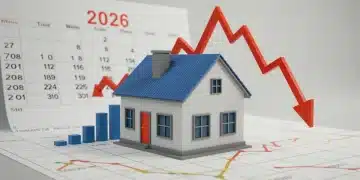
The Fed Rate Decision significantly, with experts now recalibrating their forecasts. The consensus points towards a cooling market, though the extent of this slowdown remains a subject of debate.
Affordability will likely be a dominant theme, as higher mortgage rates combine with already elevated home prices. This dual pressure could lead to a decrease in transaction volumes and a moderation in price appreciation.
Regional variations are also expected, with some markets experiencing more pronounced shifts than others. Areas with high demand and limited supply may prove more resilient, while overvalued markets could see more significant adjustments.
Shifts in Buyer Demand and Market Activity
Higher interest rates are expected to dampen buyer enthusiasm, leading to a reduction in bidding wars and a longer time on market for properties. This shift could empower buyers with more negotiation leverage.
The decrease in demand might also lead to an increase in housing inventory, providing more options for those still able to afford a purchase. This rebalancing of supply and demand is a crucial aspect of the evolving market.
Impact on Home Prices and Appreciation
While a drastic crash is not widely predicted, a deceleration in home price growth is highly probable. Some markets might even experience slight price corrections, particularly in areas that saw rapid appreciation during the pandemic.
The pace of appreciation is expected to normalize, moving closer to historical averages rather than the double-digit gains seen in recent years. This moderation could bring more stability to the housing market in the long run.
Regional Variations and Their Specific Impacts
The Fed Rate Decision will not be uniform across all regions of the United States. Local economic conditions, demographic shifts, and housing supply dynamics will dictate specific outcomes.
High-growth areas, particularly those with strong job markets and inward migration, may continue to see robust demand, albeit at a slower pace. These regions often have a structural housing shortage that buffers against interest rate shocks.
Conversely, markets that experienced speculative buying or are heavily reliant on remote work trends might be more vulnerable to corrections. Understanding these regional nuances is vital for accurate forecasting.
Urban vs. Suburban Market Dynamics
- Urban centers might see a resurgence as office returns become more common, balancing out earlier suburban booms.
- Suburban markets, while still attractive, could experience a cooling of demand compared to peak pandemic levels.
- Connectivity and infrastructure will play a larger role in determining sustained growth in various areas.
Sun Belt vs. Coastal Markets
- Sun Belt states, known for affordability and population growth, might see continued, albeit moderated, demand.
- Coastal markets, often characterized by higher prices and stricter regulations, could face more significant affordability challenges.
- Migration patterns will continue to influence housing trends in these distinct geographical regions.
The Role of Housing Supply in the Evolving Market
The existing housing supply, or lack thereof, remains a critical factor in how the Fed Rate Decision Impacts 2026 Housing Market Projections. A persistent shortage of homes for sale has been a driving force behind price increases for years.
While higher interest rates might cool demand, they also affect construction activity. Rising borrowing costs for developers and builders could slow down the pace of new home construction, exacerbating the supply issue in the long term.
Policy initiatives aimed at increasing housing density and streamlining permitting processes could help alleviate supply constraints. However, these solutions often take time to implement and yield results.

Potential Opportunities and Challenges for Buyers and Sellers
For buyers, the cooling market presents both challenges and potential opportunities. While higher mortgage rates make homes more expensive, reduced competition and potentially more inventory could offer a less frenzied buying experience.
Sellers might need to adjust their expectations regarding sale prices and timelines. The days of multiple offers above asking price may become less common, requiring a more strategic approach to listing a property.
Investors will need to carefully re-evaluate their strategies, focusing on markets with strong fundamentals and sustainable growth potential. The era of easy gains from rapid appreciation may be drawing to a close, emphasizing careful due diligence.
Government Policies and Their Influence on Housing
Beyond the Federal Reserve‘s actions, various government policies will continue to influence the Fed Rate Decision. Local zoning laws, housing affordability programs, and infrastructure investments all play a significant role.
Initiatives aimed at first-time homebuyers, such as down payment assistance programs or favorable loan terms, could help mitigate some of the negative impacts of higher interest rates. These programs often target specific demographics or income levels.
Furthermore, broader economic policies, including fiscal stimulus or tax reforms, can indirectly affect the housing market by influencing overall economic growth and consumer purchasing power. A holistic view is necessary to grasp the full picture.
Long-Term Outlook: Stability vs. Volatility
The long-term outlook for the housing market, post-Fed Rate Decision, hinges on a delicate balance between stability and potential volatility. The Fed’s goal is to achieve a soft landing, curbing inflation without triggering a severe recession.
Should inflation subside and economic growth remain resilient, the housing market could stabilize at a more sustainable pace of appreciation. This would be a healthier environment for both buyers and sellers in the long run.
However, unexpected economic shocks or a more aggressive tightening cycle could introduce further volatility, making accurate long-term predictions challenging. Vigilance and adaptability will be key for all market participants.
| Key Aspect | Impact Summary |
|---|---|
| Mortgage Rates | Expected to rise, increasing borrowing costs for buyers. |
| Housing Affordability | Likely to decrease, posing challenges for prospective homeowners. |
| Price Appreciation | Anticipated to moderate, with potential for corrections in some markets. |
| Market Activity | Projected to slow down, with reduced transaction volumes. |
Frequently Asked Questions on Housing Market Impacts
If you’re seeking a new mortgage or have an adjustable-rate mortgage, you will likely see an increase in interest rates. This means higher monthly payments and a greater overall cost of borrowing, directly impacting your housing budget.
While a drastic price crash is not expected, the 2026 housing market projections indicate a significant slowdown in price appreciation. Some overvalued markets might even experience slight price corrections, leading to more stable growth.
Affordability will remain a challenge due to higher interest rates, but reduced competition and increased inventory could offer some relief. The market may become more balanced, offering buyers more negotiation power and choices.
Higher borrowing costs for developers could slow new construction, potentially exacerbating existing supply shortages. However, a decrease in demand might also lead to more available homes, balancing out the market in some areas.
Buyers should re-evaluate their budgets and pre-approvals, while sellers may need to adjust price expectations. Consulting with a financial advisor and real estate professional is crucial to navigate these changing market conditions effectively.
Looking Ahead: Navigating the New Housing Landscape
The Fed Rate Decision, creating a new landscape for all participants. The immediate future suggests a period of adjustment, with higher borrowing costs and moderating price growth becoming the norm.
Vigilance will be essential for homeowners, prospective buyers, and investors alike as the market continues to react to these significant economic shifts. Understanding regional dynamics and policy responses will be key to making informed decisions in this evolving environment.