Understanding 3 New Federal Student Loan Repayment Plans in 2026

If you are managing student debt, major changes are officially here. The Department of Education is completely restructuring how you pay back your debt, introducing New Federal Student Loan Repayment Plans that alter your monthly bills and long-term forgiveness goals.
Navigating this overhauled system can feel overwhelming, especially with older options like the SAVE program being completely phased out.
Fortunately, these updated structural frameworks focus on eliminating ballooning interest and giving you clearer options to tackle your balances.
Understanding these revised government pathways is critical to avoiding automatic, high-cost enrollment traps. Let’s dive straight into how these fresh relief options work, what they mean for your wallet, and how to pick your best strategy.
Navigating the Evolving Landscape of Student Loan Repayment
The federal student loan system is undergoing significant reforms, with three new repayment plans slated for implementation in 2026.
These changes aim to simplify options, reduce monthly burdens for low-income borrowers, and streamline paths to loan forgiveness, addressing long-standing concerns about student debt.
Borrowers and financial advisors are now closely examining the details of these upcoming plans to understand their implications.
The Department of Education has emphasized a focus on affordability and accessibility, particularly for those struggling with high debt-to-income ratios.
This comprehensive overview provides an insider’s perspective on what to expect, offering crucial information for current and future student loan holders in the United States as they prepare for these pivotal shifts.
Key Features of the New Federal Student Loan Repayment Plans
The three new federal student loan repayment plans represent a substantial overhaul of existing options, designed to offer more flexible and manageable solutions for borrowers.
Each plan comes with distinct eligibility criteria and benefits, catering to different financial situations and career paths.
These plans are expected to replace or significantly modify some current income-driven repayment (IDR) plans, creating a more cohesive and potentially less confusing system.
The goal is to ensure that a broader range of borrowers can achieve financial stability while repaying their educational debts.
Understanding these specific features is paramount for borrowers to make informed decisions and select the plan that best aligns with their individual financial circumstances and long-term goals.
Plan 1: Enhanced Income-Driven Repayment (EIDR)
The first new plan, tentatively named Enhanced Income-Driven Repayment (EIDR), focuses on significantly lowering monthly payments for a large segment of borrowers.
This plan is projected to set monthly payments at a smaller percentage of discretionary income compared to current IDR options, making it more affordable for many.
EIDR is also expected to include more generous provisions for loan forgiveness, potentially shortening the repayment period for certain low-income individuals.
This could provide a much-needed lifeline to those who have struggled for years under traditional repayment schedules, offering a clearer path to debt relief.
- Lower percentage of discretionary income for monthly payments.
- Expanded eligibility criteria to include more borrowers.
- Faster path to loan forgiveness for specific income thresholds.
Plan 2: Career-Focused Accelerated Repayment (CFAR)
The second plan, Career-Focused Accelerated Repayment (CFAR), is specifically tailored for borrowers entering public service or high-demand, critical occupations.
This plan aims to incentivize certain career paths by offering accelerated loan forgiveness or more favorable repayment terms.
CFAR recognizes the societal value of these professions and seeks to alleviate the financial burden on individuals who choose them, ensuring that student debt does not deter talent from essential sectors.
This could include fields like teaching, healthcare, and certain government roles, aligning educational investment with national priorities.
- Targeted loan forgiveness for public service and critical occupations.
- Potentially reduced interest accumulation during repayment.
- Streamlined application process for eligible professionals.
Eligibility and Enrollment for the 2026 Repayment Plans
Eligibility for the new federal student loan repayment plans will be a critical factor for borrowers determining their best course of action. While specific details are still being finalized, general guidelines suggest a focus on income levels, family size, and the type of federal loans held.
The Department of Education aims to simplify the enrollment process, potentially leveraging existing tax data to automatically calculate discretionary income and payment amounts. This move seeks to reduce administrative hurdles that have historically complicated access to IDR plans.
Borrowers should actively monitor official announcements from the Department of Education as 2026 approaches to understand precise eligibility requirements and enrollment procedures for these transformative student loan repayment plans.
Who Qualifies for Enhanced Income-Driven Repayment?
EIDR is expected to be broadly accessible to most federal student loan borrowers, particularly those with lower incomes relative to their loan balances.
The plan aims to ensure that no borrower has to pay more than a reasonable percentage of their income towards their loans, regardless of their original loan amount.
Income thresholds and family size will play a significant role in determining eligibility and monthly payment calculations.
Borrowers should anticipate a system designed to adjust payments dynamically as their financial situation changes, providing a safety net during periods of economic hardship.
This inclusive approach is a core component of the new strategy, ensuring that a wider population can benefit from more affordable student loan repayment plans.
Specifics for Career-Focused Accelerated Repayment
CFAR eligibility will likely be tied directly to employment verification in qualifying public service or critical shortage areas. Borrowers will need to demonstrate continuous employment in an approved field for a specified period to qualify for accelerated forgiveness.
The Department of Education is expected to publish a comprehensive list of eligible employers and occupations well in advance of 2026.
This transparency will be crucial for prospective borrowers planning their careers and evaluating their repayment options under the new student loan repayment plans.
Impact on Existing Student Loan Repayment Plans
The introduction of these three new federal student loan repayment plans will inevitably impact existing options, potentially leading to the phasing out or modification of current IDR plans.
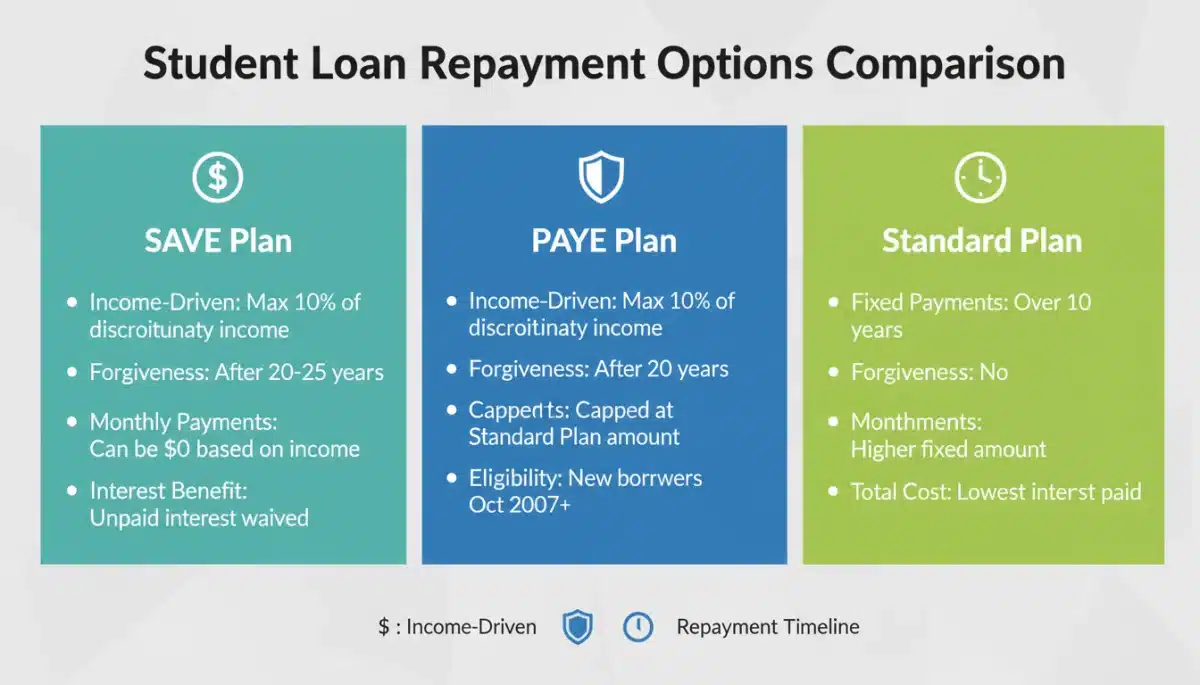
Borrowers currently enrolled in PAYE, REPAYE, IBR, or ICR should carefully review how these changes affect their current arrangements.
The Department of Education has indicated a desire to simplify the overall system, which may mean consolidating or replacing older plans with the new, more streamlined options.
This transition period will require clear communication and guidance for borrowers to avoid confusion and ensure a smooth shift.
It is crucial for borrowers to understand if and how their current repayment plan will be affected and what steps they might need to take, including potentially re-enrolling in one of the new student loan repayment plans, to optimize their financial situation.
Transitioning from Current IDR Plans
Borrowers currently utilizing existing IDR plans will need to understand the transition process as the new plans become available.
Official guidance is expected to detail whether automatic enrollment into a comparable new plan will occur, or if borrowers will need to proactively select a new option.
Key considerations during this transition will include preserving credit for past payments towards forgiveness and understanding how accumulated interest might be treated.
The goal is to ensure that borrowers do not lose progress towards loan forgiveness under the new framework for student loan repayment plans.
Information regarding grace periods, forbearance, and deferment options within the new structure will also be critical for managing debt during this period of change.
Potential for Consolidation and Simplification
A significant benefit of the new framework is the potential for greater simplification across all federal student loan programs. By streamlining the number and complexity of repayment options, the Department of Education hopes to make the system more intuitive for borrowers.
This consolidation could lead to fewer administrative errors, clearer communication, and improved access to critical information regarding student loan repayment plans. A simplified system can empower borrowers to make better financial decisions without needing extensive expert guidance.
The move towards simplification is a direct response to feedback from borrowers who often found the array of existing plans overwhelming and difficult to navigate effectively.

Benefits and Challenges of the New Plans for Borrowers
The new federal student loan repayment plans offer several potential benefits, primarily centered around increased affordability and clearer paths to loan forgiveness.
Many borrowers may experience significantly lower monthly payments, freeing up income for other essential expenses or savings.
However, these changes also present certain challenges, including the need for borrowers to re-evaluate their existing repayment strategies and understand complex new eligibility rules.
The transition period itself could be a source of confusion for some, requiring proactive engagement from borrowers.
Ultimately, the success of these new student loan repayment plans will depend on effective communication, robust support systems, and the ability of borrowers to adapt to the evolving federal loan landscape and leverage the benefits provided.
Financial Relief and Forgiveness Opportunities
The primary benefit of the new plans is the promise of enhanced financial relief. Lower monthly payments under EIDR mean more disposable income for many, potentially reducing financial stress and improving overall economic stability.
This is particularly impactful for recent graduates or those in lower-paying jobs.
For those in specific professions, CFAR offers accelerated forgiveness, drastically shortening the time frame to become debt-free.
This incentive can encourage talented individuals to pursue careers that benefit the public good, rather than being deterred by the burden of student debt, making these student loan repayment plans highly attractive.
- Reduced monthly payments based on a smaller percentage of discretionary income.
- Accelerated loan forgiveness for qualifying public service and critical occupations.
- Potential for interest subsidies to prevent loan balances from growing excessively.
Navigating New Rules and Potential Pitfalls
Despite the benefits, borrowers must be diligent in understanding the new rules. Misinterpreting eligibility criteria or failing to re-enroll correctly could lead to missed opportunities or even default. The complexity of federal regulations often requires careful attention to detail.
Another challenge might be the initial rollout, as any large-scale systemic change can encounter unforeseen issues.
Borrowers should stay informed through official channels and seek clarification from trusted financial advisors to avoid potential pitfalls with the new student loan repayment plans.
Proactive engagement and careful planning will be essential for successfully navigating these new options and maximizing their benefits.
Preparing for the 2026 Changes in Student Loan Repayment
As 2026 approaches, borrowers should begin actively preparing for the implementation of the new federal student loan repayment plans.
This preparation involves reviewing current loan status, understanding personal financial situations, and staying informed about official guidance from the Department of Education.
Proactive steps taken now can significantly ease the transition and ensure borrowers are positioned to take full advantage of the most beneficial plans.
Waiting until the last minute could lead to missed opportunities or unnecessary stress, emphasizing the importance of early engagement.
Developing a clear strategy based on individual circumstances is key to effectively managing student debt under the new framework of student loan repayment plans.
Reviewing Your Current Loan Portfolio
The first step in preparation is to thoroughly review your current federal student loan portfolio. Understand the types of loans you hold (e.g., Direct Loans, FFEL Program loans), their interest rates, and your current repayment plan.
This foundational knowledge is crucial for assessing how the new plans might apply to you.
Access your loan details through your loan servicer’s website or the National Student Loan Data System (NSLDS). This information will be vital when comparing your existing options against the new student loan repayment plans that become available in 2026.
Knowing your loan specifics will enable you to ask targeted questions and make informed decisions.
Monitoring Official Announcements and Resources
Staying updated on official announcements from the Department of Education and your loan servicer is paramount.
These entities will be the primary sources of accurate information regarding the new student loan repayment plans, including exact implementation dates, detailed eligibility, and enrollment procedures.
Subscribe to email alerts and regularly check government websites dedicated to student aid. Reliable news outlets and financial publications can also provide valuable analysis and context, helping borrowers interpret complex regulations and prepare effectively for the upcoming changes.
Avoid relying on unofficial sources for critical information, as misinformation could lead to poor financial decisions regarding your student loans.
| Key Aspect | Description of Change |
|---|---|
| Enhanced Income-Driven Repayment (EIDR) | Lower monthly payments, broader eligibility, and faster loan forgiveness paths. |
| Career-Focused Accelerated Repayment (CFAR) | Targeted forgiveness for public service and critical shortage professions. |
| Simplified Repayment Plan (SRP) | Streamlined options to reduce confusion and ease administrative burden. |
| Impact on Existing Plans | Current IDR plans may be phased out or modified, requiring borrower action. |
Frequently Asked Questions About 2026 Student Loan Changes
The primary goals are to simplify the repayment landscape, reduce monthly payment burdens for low-income borrowers, and provide clearer paths to loan forgiveness. These plans aim to make federal student debt more manageable and accessible for a wider range of individuals, addressing long-standing financial challenges.
It is not yet confirmed whether existing IDR plans will automatically transition. Borrowers should anticipate needing to actively review their options and potentially re-enroll in one of the new student loan repayment plans. Official guidance will clarify the exact transition process well before 2026.
The new plans are expected to align with PSLF, potentially making it easier for borrowers to qualify for forgiveness. CFAR, in particular, focuses on public service. Borrowers should monitor updates from the Department of Education regarding how the new plans integrate with PSLF requirements and benefits.
Start by reviewing your current federal loan details and income information. Stay informed by monitoring official Department of Education announcements and subscribing to updates from your loan servicer. Proactive research and understanding your options are crucial for making informed decisions on student loan repayment plans.
No, these new federal student loan repayment plans apply exclusively to federal student loans. Private student loans are not eligible for these programs and are governed by the terms set by the private lender. Borrowers with private loans should contact their lenders directly for repayment options.
Looking Ahead to Student Loan Repayment in 2026
The impending launch of the three new federal student loan repayment plans in 2026 marks a pivotal moment for millions of borrowers.
These reforms are designed to create a more equitable and sustainable system, addressing the long-standing challenges associated with student debt in the United States.
Borrowers are encouraged to remain vigilant, consult official resources, and consider how these changes align with their personal financial strategies. The transition will require careful attention, but the potential for significant relief and clearer pathways to debt freedom is substantial.
Ultimately, these new plans reflect a broader commitment to supporting educational attainment while ensuring financial stability for those investing in their future through federal student loans.
Understanding the intricacies of these new student loan repayment plans will be key to navigating the evolving landscape effectively.