Choosing the Right College: Data-Driven 2026 US University Outcomes
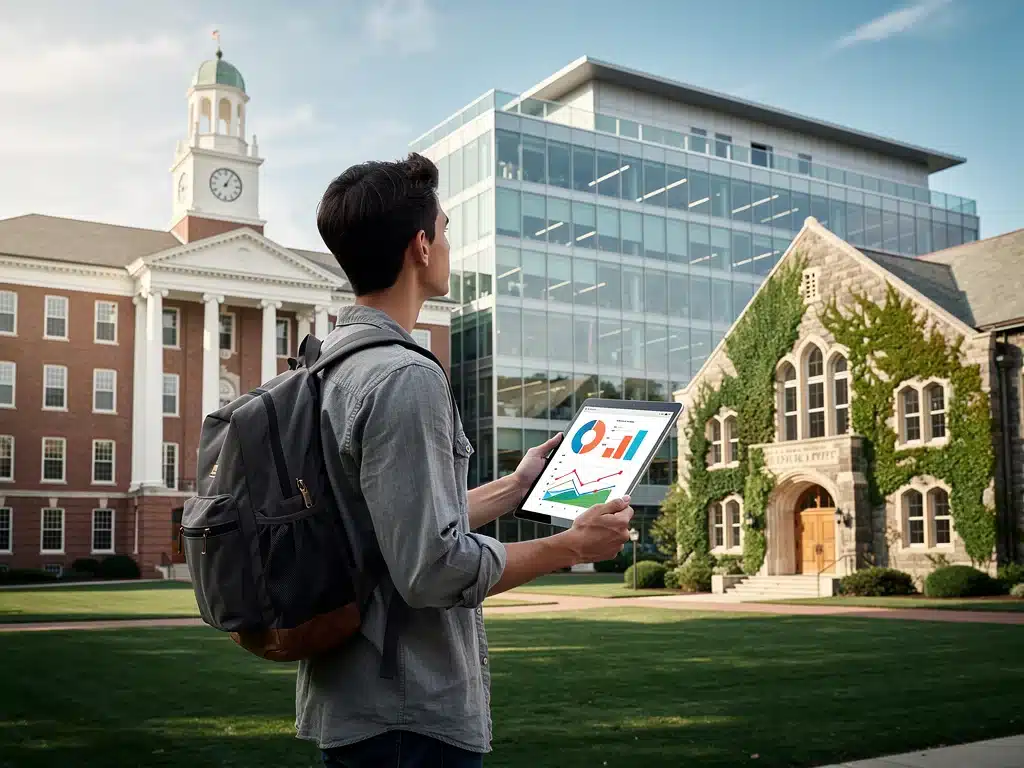
The report Choosing the Right College: A Data-Driven Comparison of 2026 US University Outcomes synthesizes the latest institutional and performance metrics across US higher education.
This concise analysis outlines major shifts in post-graduation employment rates, institutional accountability, and financial transparency, providing prospective students with the verified data needed to make strategic enrollment decisions.
Understanding the Evolving Landscape of University Outcomes
The higher education sector is undergoing significant transformations, driven by technological advancements, shifts in the job market, and changing student expectations.
Institutions are increasingly scrutinized not just for their academic rigor but also for the tangible post-graduation success of their alumni.
For the 2026 cohort, this means a heightened focus on metrics beyond traditional rankings, encompassing factors like return on investment, career placement rates, and alumni satisfaction.
A data-driven approach to a college outcomes comparison 2026 becomes indispensable for effective decision-making.
This evolving landscape necessitates a deep dive into specific data points that truly reflect an institution’s value proposition. Relying solely on reputation or anecdotal evidence is no longer sufficient in today’s competitive environment.
Key Metrics for a Data-Driven College Comparison
When undertaking a college outcomes comparison 2026, several key metrics emerge as critical indicators of institutional effectiveness and student success.
These go beyond simple acceptance rates or tuition costs, providing a more holistic view.
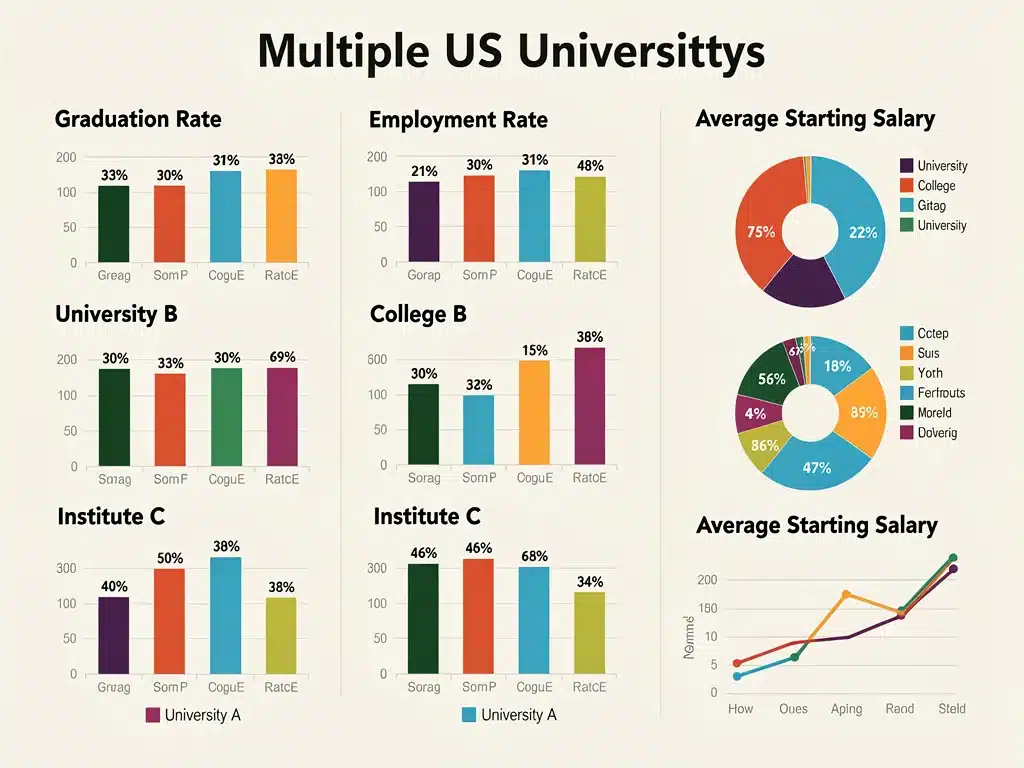
Graduation rates, particularly within a four- or six-year timeframe, offer insights into student support systems and academic program quality.
Employment rates post-graduation, often broken down by major, reveal an institution’s connection to industry and its ability to prepare students for the workforce.
Furthermore, average starting salaries and mid-career earnings provide a tangible measure of economic return on investment, a growing concern for many families.
These data points collectively paint a clearer picture of what a degree from a particular institution truly means for future prospects.
Analyzing Graduation and Retention Rates
Graduation and retention rates are fundamental indicators of a university’s commitment to student success and its capacity to support students through their academic journey.
High retention rates suggest a positive campus environment and effective student services, while strong graduation rates reflect academic quality.
For a robust college outcomes comparison 2026, examining these rates alongside specific program data can highlight institutions that excel in nurturing and graduating their students within reasonable timeframes.
This helps prospective students identify environments where they are more likely to thrive and complete their degrees.
- Four-Year Graduation Rate: Percentage of students completing their degree within four years.
- Six-Year Graduation Rate: Broader measure, accounting for different academic paths and challenges.
- First-Year Retention Rate: Indicates student satisfaction and institutional support during the crucial first year.
Post-Graduation Employment and Salary Data
The ultimate goal for many college attendees is securing meaningful employment and achieving financial stability. Therefore, post-graduation employment rates and salary data are paramount in any data-driven evaluation of universities.
These metrics, often collected through alumni surveys and career services reports, provide direct evidence of an institution’s ability to prepare students for the job market.
They can vary significantly by major and industry, making detailed analysis crucial for a comprehensive college outcomes comparison 2026.
Prospective students should look for transparency in reporting these figures, including breakdowns by specific programs and sectors. This level of detail offers a realistic expectation of career trajectories after graduation.
The Role of Accreditation and Institutional Reputation
While data-driven metrics are vital, the importance of accreditation and institutional reputation cannot be overstated in a college outcomes comparison 2026.
These factors provide a layer of quality assurance and often influence career opportunities and further academic pursuits.
Accreditation, granted by recognized agencies, ensures that an institution meets certain standards of educational quality and integrity.
It is a fundamental benchmark for legitimacy and often a prerequisite for financial aid eligibility and transfer credits.
Institutional reputation, while sometimes subjective, reflects public perception and employer recognition, which can significantly impact a graduate’s marketability.
Combining objective data with these qualitative factors creates a more nuanced understanding of a university’s standing.
Accreditation: A Baseline for Quality Assurance
Accreditation serves as a critical stamp of approval, ensuring that an educational institution meets established academic and operational standards.
Regional accreditation, in particular, is highly valued and often determines the transferability of credits and eligibility for professional licensure.
When conducting a college outcomes comparison 2026, verifying an institution’s accreditation status should be among the first steps.
Attending an unaccredited institution can have severe long-term consequences, including difficulty securing employment or gaining admission to graduate programs.
- Regional Accreditation: Most common and respected form, ensuring broad transferability of credits.
- National Accreditation: Often applies to vocational or specialized schools, with more limited transfer options.
- Programmatic Accreditation: Specific to certain departments or programs, indicating industry-specific standards.
Impact of Reputation on Post-Graduation Success
A university’s reputation, built over years of academic excellence, research contributions, and alumni achievements, plays a significant role in post-graduation success.
Employers often recognize and value degrees from highly-regarded institutions, potentially opening doors to competitive job markets.
This intangible asset can influence networking opportunities, access to influential alumni networks, and even starting salary negotiations.
While difficult to quantify directly, reputation is an important consideration in a comprehensive college outcomes comparison 2026.
Reputation is often a self-reinforcing cycle, where successful alumni contribute to the institution’s prestige, which in turn attracts more talented students and faculty. Understanding this dynamic is key to appreciating the full value of a university degree.
Analyzing Student Experience and Campus Resources
Beyond academic and career outcomes, the student experience and available campus resources significantly contribute to overall satisfaction and personal development.
These elements, while less quantifiable, are crucial for a truly informed college outcomes comparison 2026.
Factors such as student-faculty ratio, availability of research opportunities, and access to career services directly impact a student’s engagement and learning.
A supportive and enriching campus environment can foster growth far beyond the classroom.
Prospective students should investigate these aspects thoroughly, perhaps through campus visits, virtual tours, and conversations with current students and alumni.
The quality of these resources can profoundly shape an individual’s college journey.

The Importance of Program-Specific Outcomes
When engaging in a college outcomes comparison 2026, it is vital to move beyond general institutional statistics and focus on program-specific outcomes.
The success of a university can vary dramatically across its different departments and majors.
A highly-ranked university might have an exceptional engineering program but a less stellar humanities department, or vice-versa.
Therefore, prospective students should seek data relevant to their intended field of study, including specialized accreditation, faculty expertise, and alumni success in that specific discipline.
This granular approach ensures that the chosen program aligns with individual career aspirations and provides the specialized knowledge and connections necessary for success.
General university rankings, while informative, should not be the sole determinant.
Exploring Specialized Accreditations and Faculty Expertise
For many professional fields, specialized accreditations are as important as, if not more important than, institutional accreditation.
These accreditations ensure that a particular program meets rigorous industry standards and prepares graduates for specific careers.
Alongside this, the expertise and reputation of the faculty within a chosen program are paramount. Renowned professors bring cutting-edge research, industry connections, and invaluable mentorship opportunities, all of which enhance the value of a degree.
A thorough college outcomes comparison 2026 must therefore include an investigation into these program-specific details, as they directly impact the quality of education and future career prospects in a specialized field.
Navigating Financial Aid and Return on Investment
Financial considerations are a significant factor in the college selection process, making a careful analysis of financial aid and long-term return on investment (ROI) essential for any college outcomes comparison 2026.
The true cost of education extends beyond the sticker price.
Understanding the net price after grants and scholarships, as well as potential student loan burdens, is critical.
A high sticker price might be offset by generous financial aid packages, making an expensive institution more affordable than a seemingly cheaper one.
Furthermore, evaluating the long-term ROI involves comparing the cost of attendance with projected earnings and career growth.
Institutions that offer strong career services and high post-graduation salaries often provide a better long-term financial outlook, even with higher initial costs.
Evaluating Net Price vs. Sticker Price
The sticker price of a university, which includes tuition, fees, room, and board, often does not reflect the actual cost a student will pay.
The net price, calculated after grants and scholarships, and other non-repayable aid, provides a much more accurate picture of affordability.
Prospective students should utilize net price calculators available on university websites to estimate their out-of-pocket expenses.
This critical step in a college outcomes comparison 2026 helps families realistically assess the financial commitment required.
Focusing solely on the sticker price can lead to overlooking institutions that might offer substantial financial assistance, making them excellent, affordable options. A thorough financial analysis is key to making a sustainable choice.
Future Trends and What to Watch for 2026 Applicants
As we look towards 2026, several trends are poised to influence university outcomes and the decision-making process for prospective students. Staying abreast of these developments is crucial for an effective college outcomes comparison 2026.
The increasing emphasis on interdisciplinary studies, micro-credentials, and experiential learning will likely reshape how universities prepare students for dynamic job markets.
Institutions embracing these innovations may offer a competitive edge.
Furthermore, the continued evolution of online and hybrid learning models will provide greater flexibility and access, though evaluating the quality and outcomes of these programs will remain paramount.
Data transparency from institutions regarding these new models will be vital.
Emerging Technologies and Educational Innovation
The integration of emerging technologies, such as artificial intelligence and virtual reality, into curricula is set to redefine learning experiences and skill development.
Universities at the forefront of these innovations will offer students a distinct advantage in a tech-driven world.
Prospective students should investigate how institutions are incorporating these tools into their programs and the opportunities they provide for hands-on experience.
This forward-looking perspective is crucial for a relevant college outcomes comparison 2026.
The ability of universities to adapt and innovate in their pedagogical approaches will directly impact the readiness of their graduates for future challenges and opportunities in the global economy.
| Key Point | Brief Description |
|---|---|
| Data-Driven Decisions | Utilize comprehensive data beyond rankings for informed college selection. |
| Key Outcome Metrics | Focus on graduation rates, employment, and salary data specific to programs. |
| Financial Aid & ROI | Compare net price and long-term return on investment for affordability. |
| Future Trends | Consider innovative programs, technology integration, and evolving learning models. |
Frequently Asked Questions About 2026 College Outcomes
Key data points include four- and six-year graduation rates, post-graduation employment rates by major, average starting salaries, and student loan default rates. These metrics provide a comprehensive view of an institution’s effectiveness in preparing students for successful careers and financial stability.
Accreditation ensures an institution meets established quality standards, which is crucial for financial aid eligibility, credit transfer, and employer recognition. Regional accreditation is generally preferred for broad acceptance, while programmatic accreditation indicates specialized quality for specific fields of study.
While rankings offer a general overview, they should not be the sole factor. A data-driven approach requires looking beyond overall rankings to specific program outcomes, faculty expertise, and student support services that directly align with your individual academic and career goals.
The sticker price is the advertised cost, while the net price is what you actually pay after grants and scholarships. Focusing on the net price provides a more accurate financial picture, helping families identify affordable options that might initially appear expensive but offer substantial aid.
Emerging trends like interdisciplinary studies, micro-credentials, and advanced technological integration will shape future outcomes. Institutions adapting to these innovations will likely offer more relevant and competitive degrees, impacting graduates’ preparedness for evolving job markets.
Perspectives for Prospective Students
The landscape for college outcomes comparison 2026 underscores the necessity of a meticulous, data-driven approach to higher education selection.
Prospective students and their families must move beyond superficial metrics, delving into granular data that truly reflects an institution’s capacity to deliver on its promises and prepare graduates for future success.
The emphasis on program-specific outcomes, financial transparency, and responsiveness to evolving market demands will be paramount.
As the educational environment continues to shift, staying informed about institutional innovations and their measurable impact becomes a competitive advantage.
This strategic perspective ensures decisions are grounded in verifiable facts, leading to educational investments that yield significant personal and professional returns.
To weigh these long-term institutional metrics against immediate variables like financial aid packages, campus culture, and regional opportunities, you can read the expert recommendations outlined in the Forbes guide on what to consider when choosing between colleges in 2026.