Disability Benefits 2026: SSDI Updates & Application Guide

Latest developments on Disability Benefits 2026, with key facts, verified sources, and what readers need to monitor next in the United States, presented clearly. This guide covers Social Security Disability Insurance (SSDI) updates and essential application tips for beneficiaries.
Disability Benefits 2026: A Comprehensive Guide to Social Security Disability Insurance (SSDI) Updates and Application Tips is shaping today’s agenda with new details released by officials and industry sources. This update prioritizes what changed, why it matters, and what to watch next, in a straightforward news format.
Understanding the Landscape of Disability Benefits 2026
As 2026 approaches, individuals relying on or applying for Social Security Disability Insurance (SSDI) face an evolving landscape of regulations and procedures. Staying informed about these changes is crucial for ensuring continued access to vital support and navigating the application process effectively.
The Social Security Administration (SSA) continuously reviews and updates its policies, impacting how disability claims are evaluated and benefits are administered. These adjustments often reflect economic shifts, legislative priorities, and advancements in medical understanding, directly affecting beneficiaries.
For those seeking Disability Benefits 2026, understanding the nuances of these changes can significantly influence the success of their claims and their financial stability. This guide aims to demystify the upcoming updates and provide actionable insights for current and prospective SSDI recipients.
Key Legislative and Policy Updates for SSDI
Recent discussions within Congress and the Social Security Administration indicate potential legislative adjustments that could impact SSDI benefits in 2026. These proposals often aim to ensure the long-term solvency of the Social Security trust funds while also addressing the needs of disabled Americans.
Beneficiaries and applicants should closely monitor official announcements regarding any changes to eligibility criteria, benefit calculation formulas, or the appeals process. Such modifications can have profound implications for individuals currently receiving or planning to apply for Disability Benefits 2026.
The emphasis remains on maintaining a fair and efficient system, but operational improvements and cost-saving measures are frequently considered. These considerations underscore the importance of proactive engagement with available information and resources.
Expected Cost-of-Living Adjustments (COLAs)
Annual Cost-of-Living Adjustments (COLAs) are a critical component of SSDI, designed to help benefits keep pace with inflation. Projections for 2026 suggest a COLA announcement that will reflect economic conditions leading up to that year.
While the exact percentage of the 2026 COLA will be determined closer to the end of 2025, it is an essential factor for beneficiaries to consider in their financial planning. These adjustments help maintain the purchasing power of benefits, which is vital for those living on fixed incomes.
Understanding how COLAs are calculated and their potential impact on monthly payments is key for anyone receiving Disability Benefits 2026. Official SSA publications provide the most accurate information regarding these annual adjustments.
Changes to Medical Review Processes
The SSA’s medical review processes are continuously refined to ensure accurate and consistent disability determinations. Anticipated changes for 2026 may include updates to the Disability Listing of Impairments (the “Blue Book”) or new guidelines for evaluating certain medical conditions.
These adjustments can affect how medical evidence is assessed and what documentation is required to establish a disability. Applicants should be aware of any new requirements to prepare their claims thoroughly and avoid delays.
Keeping up-to-date with these medical review changes is paramount for a successful SSDI application. Consulting with medical professionals and legal experts familiar with Disability Benefits 2026 can provide invaluable guidance.

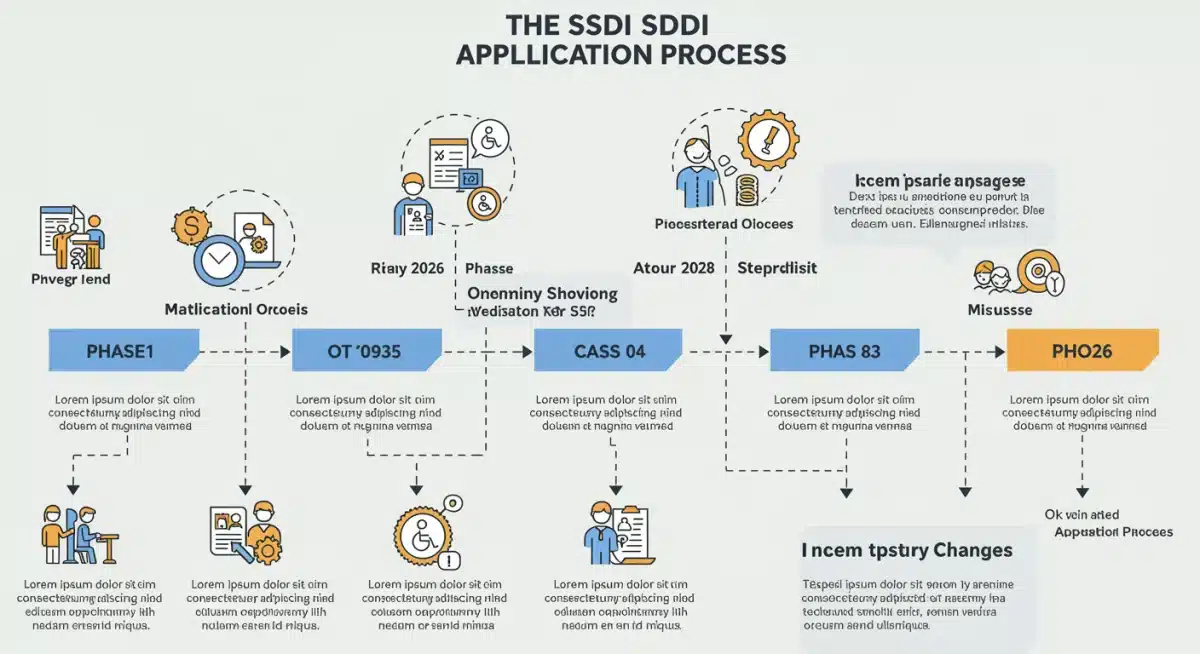
Navigating the SSDI Application Process in 2026
Applying for SSDI can be a complex and often lengthy process, requiring meticulous attention to detail and comprehensive documentation. For 2026, applicants should be prepared for potential refinements in the application procedures and submission requirements.
The SSA emphasizes the importance of complete and accurate information from the outset to prevent unnecessary delays or denials. Understanding each step of the application, from initial filing to potential appeals, is vital for a favorable outcome.
Prospective beneficiaries seeking Disability Benefits 2026 should familiarize themselves with the updated forms, online application portals, and available support resources to streamline their journey.
Essential Documentation Requirements
A successful SSDI application hinges on providing robust medical evidence and personal documentation. For 2026, applicants must ensure all medical records, treatment histories, and diagnostic test results are current and clearly demonstrate the severity and duration of their disabling condition.
Beyond medical documentation, applicants will need to supply personal identification, work history details, and financial information. Any changes to these requirements for Disability Benefits 2026 will be communicated by the SSA, making it crucial to consult official sources.
Organizing these documents systematically before beginning the application process can significantly reduce stress and improve efficiency. A comprehensive checklist can be an invaluable tool.
Tips for a Successful Application
- Gather all medical records: Ensure all relevant medical documentation, including diagnoses, treatment plans, and prognoses, is complete and up-to-date.
- Provide detailed work history: Accurately list your past employment, job duties, and earnings to demonstrate your inability to perform substantial gainful activity.
- Be honest and consistent: Provide consistent information across all forms and communications with the SSA, as discrepancies can lead to delays or denials.
- Seek professional assistance: Consider consulting with a disability attorney or advocate who specializes in SSDI claims; their expertise can be invaluable.
Appeals Process and What to Expect
If an initial SSDI application is denied, applicants have the right to appeal the decision. The appeals process involves several stages, and understanding each step is crucial for effectively challenging an unfavorable ruling. For Disability Benefits 2026, the structure of this process is expected to remain largely consistent, but procedural nuances may evolve.
The first step in an appeal is typically reconsideration, followed by a hearing before an Administrative Law Judge (ALJ), then review by the Appeals Council, and finally, federal court review. Each stage has strict deadlines, and missing them can jeopardize one’s claim.
Applicants should prepare to submit additional evidence or clarify existing information during the appeal stages. Expert legal representation often significantly improves the chances of success during this challenging phase of pursuing Disability Benefits 2026.
Understanding Reconsideration and ALJ Hearings
Reconsideration involves a fresh review of the application by a different examiner, often with new or updated medical evidence. This is a critical stage where applicants can strengthen their case without going to a formal hearing.
If reconsideration is denied, the next step is an ALJ hearing, which is a more formal proceeding where applicants, often with their legal representatives, present their case directly to a judge. This stage allows for testimony from the applicant, medical experts, and vocational experts.
Preparing thoroughly for both reconsideration and ALJ hearings is essential. This includes gathering all new medical evidence, practicing testimony, and understanding the legal arguments pertinent to Disability Benefits 2026.
Resources and Support for Disability Applicants
Navigating the complexities of SSDI can be daunting, but numerous resources and support systems are available to assist applicants. The Social Security Administration provides extensive information on its official website, including detailed guides and forms.
Beyond federal resources, various non-profit organizations, disability advocacy groups, and legal aid services offer invaluable assistance. These organizations often provide free consultations, help with documentation, and representation during the application and appeals processes.
Leveraging these resources can significantly improve an applicant’s chances of approval for Disability Benefits 2026. It is always advisable to seek help when facing difficulties or uncertainties in the application journey.
Official SSA Channels and Publications
- SSA Website: The official Social Security Administration website (ssa.gov) is the primary source for forms, publications, and program details.
- Local SSA Offices: In-person assistance is available at local SSA field offices, though appointments may be necessary.
- Toll-Free Number: The SSA’s national toll-free number provides direct access to representatives for general inquiries and assistance.
- Online Services: My Social Security account allows individuals to check application status, benefit estimates, and manage their benefits.
Financial Implications and Benefit Calculations
Understanding how SSDI benefits are calculated is crucial for financial planning. The amount of monthly benefit an individual receives is based on their average indexed lifetime earnings, not on the severity of their disability. This calculation ensures that benefits reflect an individual’s past contributions to Social Security.
Changes in the national average wage index or adjustments to the Social Security tax base can influence future benefit amounts, including those for Disability Benefits 2026. These factors are continuously monitored by the SSA and updated annually.
Applicants should review their Social Security earnings statements regularly to ensure accuracy, as errors can impact future benefit calculations. Accessing this information through a My Social Security account is a simple and effective way to stay informed.
Common Pitfalls to Avoid in Your SSDI Application
Many SSDI applications are initially denied due to common errors or omissions. Understanding these pitfalls can help applicants avoid them and increase their chances of approval. One frequent mistake is not providing sufficient medical evidence to support the disability claim.
Another common issue is failing to adhere to deadlines for submitting documents or appealing decisions. The SSA has strict timelines, and missing them can lead to the closure of a case, requiring a new application process.
Being inconsistent in reporting symptoms or work capabilities can also undermine a claim. Maintaining clear, consistent communication and documentation is key for those pursuing Disability Benefits 2026.
Importance of Medical Evidence
The cornerstone of any SSDI application is compelling medical evidence. This includes objective medical findings, such as diagnostic test results, as well as detailed reports from treating physicians that clearly outline the nature, severity, and limitations imposed by the disability.
Applicants must ensure their medical records are comprehensive and cover the entire period of their disability. Gaps in treatment or inadequate documentation can raise questions about the severity of the condition and may lead to a denial of benefits.
Working closely with healthcare providers to obtain thorough and supportive medical statements is crucial for a strong application for Disability Benefits 2026.
| Key Point | Brief Description |
|---|---|
| Legislative Updates | Potential policy shifts affecting eligibility and benefit calculations for 2026. |
| Application Tips | Guidance on documentation, common pitfalls, and seeking professional assistance for SSDI. |
| Appeals Process | Understanding the stages of appeal and the importance of timely action and evidence. |
| Benefit Calculations | How SSDI payments are determined based on earnings and the impact of COLAs. |
Frequently Asked Questions About Disability Benefits 2026
While definitive legislative changes for 2026 are still under review, potential updates include adjustments to eligibility criteria, medical review processes, and the annual Cost-of-Living Adjustment (COLA). Beneficiaries should monitor official SSA announcements for specific details as they become available.
The COLA for 2026 will be announced in late 2025 and is designed to help your benefits keep pace with inflation. The exact percentage will depend on economic indicators, directly impacting the monthly amount you receive. This ensures your purchasing power is maintained.
For a strong 2026 SSDI application, comprehensive medical records are vital. This includes diagnostic test results, treatment histories, physician statements detailing your condition’s severity and limitations, and any prognoses. Ensure all documentation is current and clearly supports your disability claim.
Yes, if your initial SSDI application is denied, you have the right to appeal. The process typically involves reconsideration, a hearing before an Administrative Law Judge (ALJ), Appeals Council review, and potentially federal court. Adhering to strict deadlines at each stage is crucial.
Reliable resources include the official Social Security Administration website (ssa.gov), local SSA offices, and their toll-free number. Non-profit organizations, disability advocacy groups, and disability attorneys specializing in SSDI claims also offer invaluable assistance and guidance throughout the application process.
Looking Ahead
The landscape of Disability Benefits 2026 continues to evolve, with ongoing legislative debates and administrative refinements shaping the future of Social Security Disability Insurance. Staying informed through official channels and expert analysis is paramount for current and prospective beneficiaries.
The impact of these changes extends beyond mere policy adjustments; they directly affect the lives and financial security of millions. Therefore, proactive engagement with updated information and a clear understanding of the application and appeals processes will remain essential.
As new details emerge, this guide will continue to provide timely and verified insights into the critical components of Disability Benefits 2026, ensuring readers are well-equipped to navigate the system effectively.