Global Economic Outlook 2026: US Trade Agreements Under Scrutiny
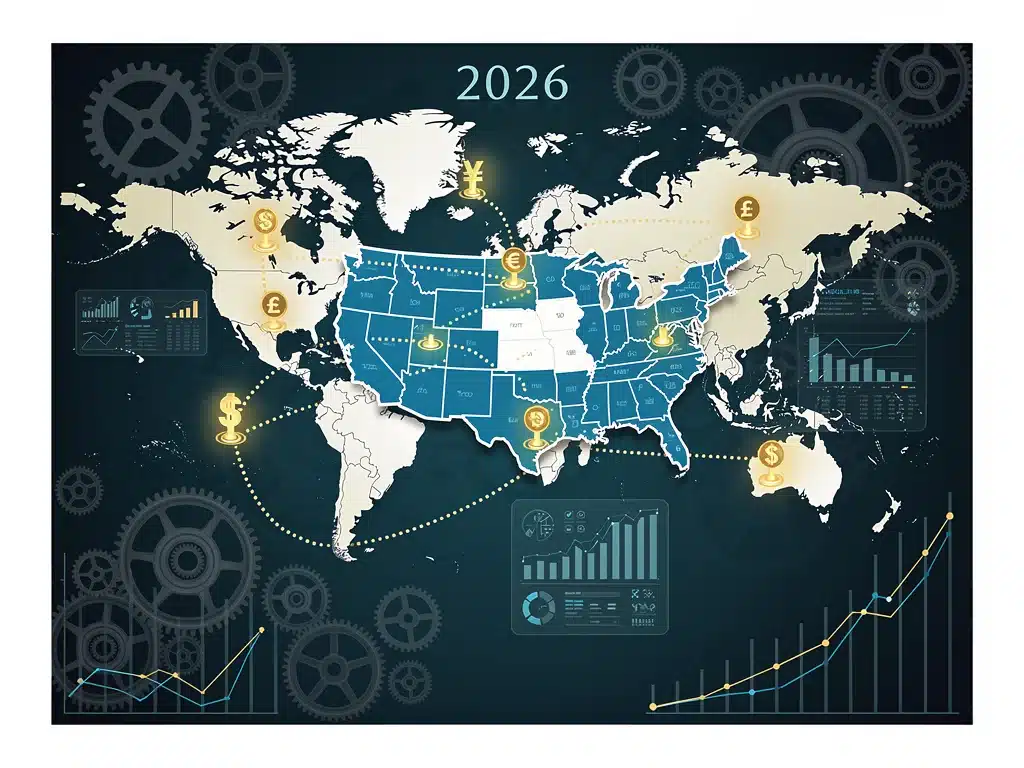
Analyzing the Global Economic Outlook 2026 reveals a critical turning point as international trade agreements face unprecedented scrutiny. Supply chain realignments and intense policy reviews are forcing nations to reassess cross-border commercial alliances.
Policymakers and global enterprises are closely re-evaluating tariff structures, bilateral pacts, and reciprocal market access provisions. These stringent regulatory audits aim to protect domestic industrial bases while navigating persistent inflation pressures and changing market access terms.
Discover how these shifting trade frameworks and enforcement actions impact multinational operations, foreign investment, and economic growth. Stay ahead of regulatory shifts to safeguard your business strategy in today’s changing global market.
The Shifting Landscape of Global Trade in 2026
The global economic landscape in 2026 is marked by significant shifts, with geopolitical tensions and technological advancements reshaping traditional trade dynamics. Nations are increasingly reassessing their economic partnerships, leading to a period of intense scrutiny for existing agreements.
This evolving environment places particular pressure on the United States, a central player in international commerce. The effectiveness and fairness of its trade agreements are now under a magnifying glass, both domestically and by its global partners.
Understanding these shifts is crucial for businesses, policymakers, and citizens alike, as they directly influence economic stability, market access, and the cost of goods and services. The implications of these reviews will resonate across various sectors.
Key Drivers Behind U.S. Trade Agreement Scrutiny
Several factors are converging to drive the intense scrutiny of U.S. trade agreements. National security concerns, coupled with a renewed focus on domestic industrial capacity, are pushing for a re-evaluation of dependencies on foreign supply chains.
Economic nationalism and the desire to protect domestic jobs are also prominent themes in the political discourse. This often translates into calls for tougher enforcement of existing agreements or the renegotiation of terms perceived as unfavorable.
Furthermore, the rise of new economic powers and changing global power dynamics necessitate an adaptation of trade policies. The U.S. seeks to maintain its competitive edge while navigating a complex and multipolar world order.
Impact of Geopolitical Tensions
Geopolitical tensions, particularly with major economic competitors, are directly influencing trade policy. These tensions often lead to tariffs, sanctions, and other trade barriers, forcing a re-evaluation of existing agreements and supply chain resilience.
The strategic implications of trade are now as important as the economic ones. Ensuring access to critical resources and preventing technology transfer to adversaries are becoming central tenets of U.S. trade strategy.
This heightened focus on national security has transformed trade agreements from purely economic instruments into tools of geopolitical influence, adding another layer of complexity to their scrutiny.
Domestic Economic Priorities
The emphasis on domestic economic priorities, such as job creation and industrial revitalization, is a significant driver. Policymakers are examining how trade agreements impact local industries and employment rates, aiming to ensure benefits accrue domestically.
This includes reviewing provisions related to labor standards, environmental protections, and intellectual property. The goal is often to level the playing field for American businesses and workers in the global marketplace.
The debate around these priorities often involves balancing the benefits of open trade with the need to safeguard specific sectors from intense foreign competition, a delicate act for any administration.
Major U.S. Trade Agreements Under the Microscope
Several significant U.S. trade agreements are currently undergoing rigorous examination. These include long-standing pacts as well as more recent arrangements, all subject to potential modifications or renegotiations based on the Global Economic Outlook 2026.
The United States-Mexico-Canada Agreement (USMCA), a successor to NAFTA, is consistently reviewed for its effectiveness in promoting fair trade and protecting North American industries. Its provisions on automotive rules of origin and labor standards are particularly scrutinized.
Trade relations with key partners in Asia and Europe are also under continuous assessment. Bilateral agreements and broader regional frameworks are being evaluated for their strategic alignment and economic benefits in the current global climate.
USMCA: A Continued Review
The USMCA, despite its relatively recent implementation, is not immune to ongoing scrutiny. Its mechanisms for dispute resolution and the impact of its agricultural provisions are frequently debated among stakeholders and policymakers.
Concerns about compliance with labor and environmental standards, particularly in Mexico, remain a focus. The U.S. administration aims to ensure that the agreement effectively safeguards American workers and businesses from unfair practices.
The agreement’s adaptability to emerging economic challenges, such as digital trade and intellectual property protection, will also be a key area of review as the Global Economic Outlook 2026 unfolds.
Transatlantic and Trans-Pacific Dynamics
Trade dynamics with European partners are complex, involving a mix of cooperation and contention. Issues such as digital services taxes, agricultural subsidies, and industrial tariffs frequently lead to trade disputes and calls for renegotiation.
In the Indo-Pacific region, the U.S. is seeking to strengthen economic ties through various initiatives, even without a comprehensive free trade agreement like the Trans-Pacific Partnership (TPP). The focus is on resilient supply chains and strategic partnerships.
The absence of a broad regional trade agreement in Asia means the U.S. often relies on bilateral deals and framework agreements. These are now being critically assessed for their ability to project U.S. economic influence and counter rival powers.
Potential Economic Impacts of Renegotiation
The potential renegotiation or modification of U.S. trade agreements carries significant economic implications. Changes could affect import and export costs, consumer prices, and the competitiveness of various industries, influencing the Global Economic Outlook 2026.
Businesses relying on global supply chains may face increased costs and operational complexities if tariffs are imposed or trade barriers rise. This could lead to shifts in manufacturing locations and sourcing strategies, impacting overall efficiency.
Conversely, some domestic industries could benefit from increased protection or reduced foreign competition, potentially leading to job growth and investment in those sectors. However, these gains often come at the expense of consumers or other industries.
Expert Analysis: Perspectives on the Future
Experts offer diverse perspectives on the trajectory of U.S. trade policy and its impact on the Global Economic Outlook 2026.
Many anticipate a continued emphasis on strategic trade, where economic policy is closely intertwined with national security and geopolitical objectives.
Some analysts predict a move towards more targeted, bilateral agreements, rather than broad multilateral pacts. This approach allows for greater flexibility in addressing specific concerns with individual trading partners.
Others foresee a period of increased protectionism, driven by domestic political pressures and a desire to reshore manufacturing. This could lead to higher costs for consumers and potential retaliation from trading partners, impacting global trade flows.
Views on Multilateralism vs. Bilateralism
The debate between multilateralism and bilateralism remains central to trade policy discussions. Proponents of multilateralism argue that broad agreements foster greater stability and predictability in global trade, benefiting all participants.
Conversely, advocates for bilateralism contend that targeted agreements allow the U.S. to negotiate more favorable terms tailored to specific economic and strategic interests. This approach can be more agile in response to rapidly changing global conditions.
The current trend suggests a pragmatic blend of both, with the U.S. engaging in multilateral forums for norm-setting while pursuing bilateral deals to address specific trade grievances or opportunities. This mixed strategy defines the Global Economic Outlook 2026.
Anticipated Sectoral Winners and Losers
Changes in trade agreements will inevitably create winners and losers across various economic sectors. Industries with strong domestic political backing or those deemed strategically important, such as advanced manufacturing or critical minerals, may see increased support.
Conversely, sectors heavily reliant on imported components or those facing significant international competition could experience challenges.
Consumer goods, for instance, might see price increases due to tariffs on imported inputs, which is a key part of the Global Economic Outlook 2026.
The agricultural sector, a perennial point of contention in trade negotiations, will also be closely watching for impacts on export markets and domestic support programs. The outcome for each sector will depend on the specifics of renegotiated terms.
The Role of Technology and Digital Trade
Technology and digital trade are increasingly central to the discussion around U.S. trade agreements. The rapid growth of e-commerce, data flows, and artificial intelligence necessitates new rules and frameworks that often outpace traditional trade law.
Issues such as data privacy, cross-border data transfers, and intellectual property protection for digital products are becoming critical components of trade negotiations. The U.S. aims to ensure an open and secure digital economy.
The integration of technology into manufacturing and supply chains also means that trade agreements must address issues of automation, cybersecurity, and the free flow of technological innovation. This is a critical aspect of the Global Economic Outlook 2026.

Challenges and Opportunities for U.S. Businesses
U.S. businesses face both significant challenges and opportunities amidst the ongoing scrutiny of trade agreements. Navigating evolving trade policies requires agility and strategic foresight to adapt to new market conditions.
Challenges include increased compliance costs, potential supply chain disruptions, and uncertainty regarding market access. Businesses must closely monitor policy changes and assess their potential impact on operations and profitability.
Opportunities may arise from new market openings, reduced competition in specific sectors, or government incentives for domestic production. Companies that can adapt quickly and innovate within the new trade landscape are best positioned to thrive.
Adapting Supply Chains
The emphasis on supply chain resilience means businesses are increasingly looking to diversify their sourcing and manufacturing locations. This involves reducing reliance on single suppliers or regions, particularly those deemed geopolitically risky.
Investment in domestic production and nearshoring, where production is moved to neighboring countries, are becoming more attractive options. These strategies aim to mitigate risks associated with international trade disruptions.
Companies are also exploring advanced technologies, such as blockchain, to enhance transparency and traceability within their supply chains, ensuring compliance with evolving trade regulations. This is vital for the Global Economic Outlook 2026.
Navigating Market Access
Market access remains a critical concern for U.S. exporters. Potential changes in tariffs, quotas, and non-tariff barriers could significantly impact their ability to compete in foreign markets.
Businesses need to stay informed about the specifics of renegotiated agreements and understand how new rules of origin or product standards might affect their exports. Engaging with trade associations and government agencies can provide valuable insights.
Furthermore, exploring new markets that may become more accessible under revised trade policies or through new bilateral agreements presents an opportunity for growth and diversification.
Implications for Global Economic Stability
The outcome of the scrutiny on U.S. trade agreements will have profound implications for global economic stability. As the world’s largest economy, changes in U.S. trade policy ripple across international markets, influencing investment flows, currency valuations, and commodity prices.
Increased protectionism or trade disputes could lead to a fragmentation of global trade, hindering economic growth and potentially sparking retaliatory measures from other nations. This could undermine the principles of free and open trade.
Conversely, a more balanced and strategically aligned set of U.S. trade agreements could foster greater stability and predictability, encouraging international cooperation and sustainable economic development. This is a central theme in the Global Economic Outlook 2026.
| Key Aspect | Description |
|---|---|
| Global Economic Outlook 2026 | Forecasts show continued volatility, driven by geopolitics and technological shifts. |
| U.S. Trade Scrutiny | Agreements reviewed for national security, domestic jobs, and fair trade. |
| Economic Impacts | Potential changes in costs, supply chains, and industry competitiveness. |
| Future Trends | Shift towards strategic trade, digital economy focus, and supply chain resilience. |
Frequently Asked Questions About U.S. Trade Agreements in 2026
The scrutiny is primarily driven by national security concerns, a focus on domestic industrial capacity, and geopolitical shifts. Economic nationalism and the desire to protect American jobs also play significant roles in the ongoing re-evaluation of existing trade pacts.
The 2026 outlook, characterized by economic volatility and evolving power dynamics, is likely to push the U.S. towards more strategic and protectionist trade policies. This could lead to renegotiations, new tariffs, and a greater emphasis on resilient supply chains to mitigate global risks.
The United States-Mexico-Canada Agreement (USMCA) is under continuous review, particularly regarding its automotive and labor provisions. Additionally, various bilateral agreements and trade relations with key partners in Asia and Europe are being closely examined for their economic and strategic alignment.
U.S. businesses could face increased import/export costs, supply chain disruptions, and market access challenges. Conversely, some domestic industries may benefit from increased protection. Adaptability and strategic diversification will be crucial for navigating these changes in the Global Economic Outlook 2026.
Digital trade is a growing focus, with issues like data privacy, cross-border data flows, and intellectual property for digital products becoming critical. Trade agreements must adapt to regulate e-commerce and technological innovation, ensuring both security and an open digital economy for the Global Economic Outlook 2026.
Looking Ahead
The ongoing scrutiny of U.S. trade agreements represents a pivotal moment for the global economy. The decisions made in the coming year will not only shape America’s economic future but also influence international trade relations and global stability.
Businesses and policymakers must remain vigilant, adapting to a dynamic environment where economic policy is increasingly intertwined with geopolitical strategy. Understanding the nuances of the Global Economic Outlook 2026 is paramount for informed decision-making.